

- University
- Academic
- Schools/Vocational Schools
- Vocational School of Justice
- Vocational School
- Vocational School
- Department of Banking and Insurance (Turkish)
- Department of Computer Programming (Turkish)
- Department of Foreign Trade (Turkish)
- Department of Graphic Design (Turkish)
- Department of Interior Design (Turkish)
- Department of Construction Technology (Turkish)
- Department of Occupational Health and Safety (Turkish)
- Department of Media and Communication (Turkish)
- Department of Architectural Restoration (Turkish)
- Department of Radio and Tv Programming (Turkish)
- Department of Civil Aviation Cabin Services (Turkish)
- Department of Civil Aviation Transportation Management (Turkish)
- Department of Tourism and Hotel Management (Turkish)
- Department of Applied English Translation
- Vocational School Of Health Services
- Vocational School Of Health Services
- Department of Child Development (Turkish)
- Department of Physiotherapy (Turkish)
- Department of Paramedic (Turkish)
- Department of Opticianry (Turkish)
- Department of Medical Documentation and Secreteriat (Turkish)
- Department of Medical Imaging Techniques (Turkish)
- Department of Medical Laboratory Techniques (Turkish)
- Department of Elderly Care (Turkish)
- School of Applied Management Sciences
- School of Foreign Languages
- Faculties
- Faculty of Arts and Sciences
- Faculty of Fine Arts and Design
- Faculty of Law
- Faculty of Communication
- Faculty of Business
- Faculty of Engineering
- Faculty of Engineering
- Department of Computer Engineering
- Department of Biomedical Engineering
- Department of Electrical and Electronics Engineering
- Department of Industrial Engineering
- Department of Food Engineering
- Department of Genetics and Bioengineering
- Department of Aerospace Engineering
- Department of Civil Engineering
- Department of Mechanical Engineering
- Department of Mechatronics Engineering
- Department of Software Engineering
- Faculty of Health Sciences
- Medicine
- Graduate School
- Common Courses
- Schools/Vocational Schools
- Research
- Research Centers
- Library
- Smart Campus
- Technology Transfer Office
- İzmir Sciencepark
- Continuous Education Center (EKOSEM)
- Children's University
- Ethics Committee
- Teaching and Learning Center (EKOEĞİTİM)
- Psychology Application and Research Center
- Researcher Training Coordinatorship
- Research Collaborations And Innovation Coordinatorship
- Campus
- INTERNATIONAL
- Contact
- 25TH YEAR
Department of International Trade and Finance
BA 201 | Course Introduction and Application Information
| Course Name |
Principles of Marketing
|
|
Code
|
Semester
|
Theory
(hour/week) |
Application/Lab
(hour/week) |
Local Credits
|
ECTS
|
|
BA 201
|
Spring
|
3
|
0
|
3
|
6
|
| Prerequisites |
None
|
|||||
| Course Language |
English
|
|||||
| Course Type |
Required
|
|||||
| Course Level |
First Cycle
|
|||||
| Mode of Delivery | - | |||||
| Teaching Methods and Techniques of the Course | DiscussionCase StudyQ&ALecture / Presentation | |||||
| National Occupation Classification | - | |||||
| Course Coordinator | ||||||
| Course Lecturer(s) | ||||||
| Assistant(s) | ||||||
| Course Objectives | This introduction to marketing course aims to inform students about the basic principles of marketing by introducing the key concepts of marketing, consumer behavior, target market selection, positioning and marketing mix strategies. |
| Learning Outcomes |
The students who succeeded in this course;
|
| Course Description | This course consists of detailed investigations of the topics of the basic concepts of marketing, marketing environment, consumer behavior, segmentation, targeting, positioning, product development, pricing, place and promotion strategies. P.S. All academic work undertaken at Izmir University of Economics is subject to the “Universities’ Academic Honesty Codes and Regulations”. For details, please see: http://isl.ieu.edu.tr/en/akademik-durustluk |
| Related Sustainable Development Goals |
|
|
|
Core Courses | |
| Major Area Courses | ||
| Supportive Courses | ||
| Media and Management Skills Courses | ||
| Transferable Skill Courses |
WEEKLY SUBJECTS AND RELATED PREPARATION STUDIES
| Week | Subjects | Related Preparation |
| 1 | Introduction to the Course and Discussion of Requirements | |
| 2 | Core Concepts of Marketing | Course Book - Chapter 1 |
| 3 | Core Concepts of Marketing (cont.) | Course Book - Chapter 1,2 |
| 4 | Marketing Environment | Course Book - Chapter 3 |
| 5 | Consumer Behavior | Course Book - Chapter 5 |
| 6 | Consumer Behavior (cont.) | Course Book - Chapter 5 |
| 7 | Segmentation, Targeting, Positioning | Course Book - Chapter 7 |
| 8 | Midterm Exam | |
| 9 | Marketing Mix: Product Strategies | Course Book – Chapter 8 |
| 10 | Marketing Mix: New Product Strategies | Course Book - Chapter 9 |
| 11 | Marketing Mix: Pricing Strategies | Course Book - Chapter 10-11 |
| 12 | Marketing Mix: Distribution Strategies | Course Book - Chapter 12 |
| 13 | Marketing Mix: Promotion Strategies | Course Book - Chapter 14 |
| 14 | Case Study on Marketing Mix | |
| 15 | Review of the Course | Chapter 8-14 |
| 16 | Final Exam |
| Course Notes/Textbooks | Principles of Marketing, 19th ed. P. Kotler, G. Armstrong, S. Balasubramanian, Pearson,2024.
ISBN 10: 978-1-292-44-936-5
ISBN 13: 978-1-292-44-936-4
|
| Suggested Readings/Materials |
EVALUATION SYSTEM
| Semester Activities | Number | Weigthing |
| Participation |
-
|
-
|
| Laboratory / Application | ||
| Field Work | ||
| Quizzes / Studio Critiques | ||
| Portfolio | ||
| Homework / Assignments |
1
|
30
|
| Presentation / Jury | ||
| Project |
-
|
-
|
| Seminar / Workshop | ||
| Oral Exams | ||
| Midterm |
1
|
30
|
| Final Exam |
1
|
40
|
| Total |
| Weighting of Semester Activities on the Final Grade |
2
|
60
|
| Weighting of End-of-Semester Activities on the Final Grade |
1
|
40
|
| Total |
ECTS / WORKLOAD TABLE
| Semester Activities | Number | Duration (Hours) | Workload |
|---|---|---|---|
| Theoretical Course Hours (Including exam week: 16 x total hours) |
16
|
3
|
48
|
| Laboratory / Application Hours |
16
|
0
|
|
| Study Hours Out of Class |
14
|
3
|
42
|
| Field Work |
0
|
||
| Quizzes / Studio Critiques |
0
|
||
| Portfolio |
0
|
||
| Homework / Assignments |
1
|
10
|
10
|
| Presentation / Jury |
0
|
||
| Project |
-
|
-
|
0
|
| Seminar / Workshop |
0
|
||
| Oral Exam |
0
|
||
| Midterms |
1
|
30
|
30
|
| Final Exam |
1
|
38
|
38
|
| Total |
168
|
COURSE LEARNING OUTCOMES AND PROGRAM QUALIFICATIONS RELATIONSHIP
|
#
|
Program Competencies/Outcomes |
* Contribution Level
|
|||||
|
1
|
2
|
3
|
4
|
5
|
|||
| 1 |
To be able to identify and analyze problems in the field of trade and finance, and to develop solutions. |
-
|
-
|
-
|
-
|
-
|
|
| 2 |
To be able to apply theoretical and practical knowledge of international trade and finance to real-world professional contexts. |
-
|
-
|
-
|
X
|
-
|
|
| 3 |
To be able to critically analyze global market developments and evaluate their implications for business and policy. |
-
|
-
|
-
|
-
|
X
|
|
| 4 |
To be able to collect, analyze, and interpret financial and economic data by using digital and information technologies effectively. |
-
|
-
|
-
|
-
|
-
|
|
| 5 |
To be able to understand and interpret legal frameworks, regulations and practices relevant to international trade and finance. |
-
|
-
|
-
|
-
|
-
|
|
| 6 |
To be able to anticipate, define, and manage financial and trade-related risks through informed decision-making. |
-
|
-
|
-
|
-
|
-
|
|
| 7 |
To be able to acquire and use verbal, written, and numerical skills effectively for the nature of international trade and finance program. |
-
|
-
|
-
|
-
|
X
|
|
| 8 |
To be able to obtain, synthesize, and report trade- and finance-related information clearly and effectively. |
-
|
-
|
-
|
-
|
-
|
|
| 9 |
To be able to contribute effectively as individuals, team members, and leaders in multidisciplinary environments. |
-
|
-
|
-
|
-
|
-
|
|
| 10 |
To be able to evaluate trade and finance issues from ethical, social, and sustainability perspectives. |
-
|
-
|
-
|
-
|
-
|
|
| 11 |
To be able to collect data in the areas of International Trade and Finance and communicate with colleagues in a foreign language ("European Language Portfolio Global Scale", Level B1). |
-
|
-
|
-
|
-
|
-
|
|
| 12 |
To be able to speak a second foreign at a medium level of fluency efficiently. |
-
|
-
|
-
|
-
|
-
|
|
| 13 |
To be able to relate the knowledge accumulated throughout human history to their field of expertise. |
-
|
-
|
-
|
-
|
-
|
|
*1 Lowest, 2 Low, 3 Average, 4 High, 5 Highest
SOCIAL MEDIA



SOCIAL MEDIA
NEWSALL NEWS

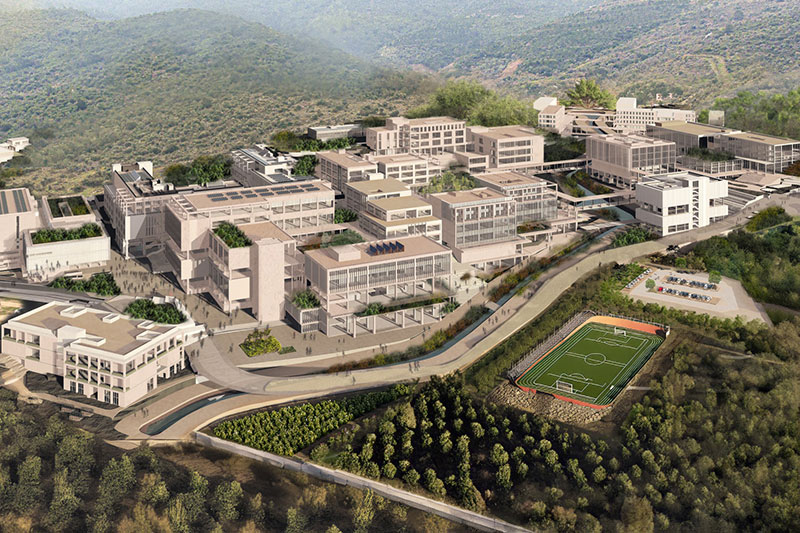
IZMIR UNIVERSITY OF ECONOMICS GÜZELBAHÇE CAMPUS
DetailsGLOBAL CAREER
As Izmir University of Economics transforms into a world-class university, it also raises successful young people with global competence.
More..CONTRIBUTION TO SCIENCE
Izmir University of Economics produces qualified knowledge and competent technologies.
More..VALUING PEOPLE
Izmir University of Economics sees producing social benefit as its reason for existence.
More..
You are one step ahead with your graduate education at Izmir University of Economics.