

- University
- Academic
- Schools/Vocational Schools
- Vocational School of Justice
- Vocational School
- Vocational School
- Department of Banking and Insurance (Turkish)
- Department of Computer Programming (Turkish)
- Department of Foreign Trade (Turkish)
- Department of Graphic Design (Turkish)
- Department of Interior Design (Turkish)
- Department of Construction Technology (Turkish)
- Department of Occupational Health and Safety (Turkish)
- Department of Media and Communication (Turkish)
- Department of Architectural Restoration (Turkish)
- Department of Radio and Tv Programming (Turkish)
- Department of Civil Aviation Cabin Services (Turkish)
- Department of Civil Aviation Transportation Management (Turkish)
- Department of Tourism and Hotel Management (Turkish)
- Department of Applied English Translation
- Vocational School Of Health Services
- Vocational School Of Health Services
- Department of Child Development (Turkish)
- Department of Physiotherapy (Turkish)
- Department of Paramedic (Turkish)
- Department of Opticianry (Turkish)
- Department of Medical Documentation and Secreteriat (Turkish)
- Department of Medical Imaging Techniques (Turkish)
- Department of Medical Laboratory Techniques (Turkish)
- Department of Elderly Care (Turkish)
- School of Applied Management Sciences
- School of Foreign Languages
- Faculties
- Faculty of Arts and Sciences
- Faculty of Fine Arts and Design
- Faculty of Law
- Faculty of Communication
- Faculty of Business
- Faculty of Engineering
- Faculty of Engineering
- Department of Computer Engineering
- Department of Biomedical Engineering
- Department of Electrical and Electronics Engineering
- Department of Industrial Engineering
- Department of Food Engineering
- Department of Genetics and Bioengineering
- Department of Aerospace Engineering
- Department of Civil Engineering
- Department of Mechanical Engineering
- Department of Mechatronics Engineering
- Department of Software Engineering
- Faculty of Health Sciences
- Medicine
- Graduate School
- Common Courses
- Schools/Vocational Schools
- Research
- Research Centers
- Library
- Smart Campus
- Technology Transfer Office
- İzmir Sciencepark
- Continuous Education Center (EKOSEM)
- Children's University
- Ethics Committee
- Teaching and Learning Center (EKOEĞİTİM)
- Psychology Application and Research Center
- Researcher Training Coordinatorship
- Research Collaborations And Innovation Coordinatorship
- Campus
- INTERNATIONAL
- Contact
- 25TH YEAR
Department of International Trade and Finance
ITF 428 | Course Introduction and Application Information
| Course Name |
Special Topics in Foreign Trade
|
|
Code
|
Semester
|
Theory
(hour/week) |
Application/Lab
(hour/week) |
Local Credits
|
ECTS
|
|
ITF 428
|
Fall/Spring
|
3
|
0
|
3
|
5
|
| Prerequisites |
None
|
|||||
| Course Language |
English
|
|||||
| Course Type |
Elective
|
|||||
| Course Level |
First Cycle
|
|||||
| Mode of Delivery | face to face | |||||
| Teaching Methods and Techniques of the Course | DiscussionGroup WorkProblem SolvingCase StudyQ&AField trip / ObservationLecture / Presentation | |||||
| National Occupation Classification | - | |||||
| Course Coordinator | ||||||
| Course Lecturer(s) | ||||||
| Assistant(s) | ||||||
| Course Objectives | This course will help students develop their knowledge of international business environments and develop skills to analyze strategies of multinational firms in the global economy. |
| Learning Outcomes |
The students who succeeded in this course;
|
| Course Description | This course examines contemporary issues in international trade and global business, with emphasis on trade policy, geopolitics, MENA markets, country risk, economic intelligence, Türkiye's foreign trade policy, free zones, investment, trade agreements, economic diplomacy, e-export, and emerging developments in global trade. The course combines theoretical analysis with case studies, institutional reports, economic intelligence exercises, field-based learning, and a group market-entry project. |
| Related Sustainable Development Goals |
|
|
|
Core Courses | |
| Major Area Courses | ||
| Supportive Courses |
X
|
|
| Media and Management Skills Courses | ||
| Transferable Skill Courses |
WEEKLY SUBJECTS AND RELATED PREPARATION STUDIES
| Week | Subjects | Related Preparation |
| 1 | Introduction to Foreign Trade and Global Business | Krugman, P. R., Obstfeld, M., & Melitz, M. J. (2018). International Economics: Theory and Policy (11th ed.). Pearson. Chapter 1: “The World Economy.” ISBN 9780134520636. |
| 2 | Global Trade: Trends and Transformation | World Trade Organization (2025). World Trade Report 2025: Making Trade and AI Work Together to The Benefit of All. Executive Summary and Introduction. |
| 3 | Trade Policy and Geopolitics | European Commission, Directorate-General for Economic and Financial Affairs & Directorate-General for Trade (2023). Global Trade Fragmentation: An EU Perspective, Executive Summary |
| 4 | International Markets: Opportunities and Risks | World Bank (2025). Global Economic Prospects, Introduction and Overview of Findings. |
| 5 | Market Entry and Country Risk Analysis | U.S. Department of Commerce, International Trade Administration. Assess Country Risk, sections “Country Factors to Research” and “Resources and Assistance.” |
| 6 | Economic Intelligence for Exporters | Heuer, R. J., Jr., & Pherson, R. H. (2019). Structured Analytic Techniques for Intelligence Analysis (3rd ed.). CQ Press/SAGE. Chapter 1: “The Nature of Analysis.” The third edition presents structured techniques for intelligence and business analysis. |
| 7 | Project Workshop: Company, Product and Market Selection | International Trade Centre (ITC). Trade Map: Trade Statistics for International Business Development — Students review the Trade Map methodology and identify potential markets for their selected product. |
| 8 | Midterm | |
| 9 | Türkiye's Foreign Trade Policy and Export Supports | Republic of Türkiye Ministry of Trade. Export, sections on Export Regime and Inward Processing Regime. https://ticaret.gov.tr/ |
| 10 | Free Zones, Investment and Regional Development | Republic of Türkiye Ministry of Trade. Free Zones – General Introduction, including the objectives, advantages, and institutional structure of Türkiye's free zones. https://ticaret.gov.tr/ |
| 11 | Field Visit: İzmir Free Zone Directorate | Republic of Türkiye Ministry of Trade. İzmir Free Zone institutional information and statistics. Students review the institutional material before the field visit. https://www.izbas.net/tr/. |
| 12 | Trade Agreements and Economic Diplomacy | World Trade Organization. Regional Trade Agreements: An Introduction, sections “Regional Trade Agreements and the WTO” and “WTO Rules on RTAs.” |
| 13 | Re-globalization, E-Export and the Future of Trade | UN Trade and Development (UNCTAD) (2024). Digital Economy Report 2024: Shaping an Environmentally Sustainable and Inclusive Digital Future, Chapter V: “E-commerce and Environmental Sustainability.” |
| 14 | Presentations | - |
| 15 | Presentations | |
| 16 | Final Exam |
| Course Notes/Textbooks | Krugman, P. R., Obstfeld, M., & Melitz, M. J. (2018). International Economics: Theory and Policy (11th ed.). Pearson. ISBN: 9780134520636. Pherson, R. H., & Heuer, R. J., Jr. (2019). Structured Analytic Techniques for Intelligence Analysis (3rd ed.). CQ Press/SAGE. |
| Suggested Readings/Materials | Baldwin, R. (2016). The Great Convergence: Information Technology and the New Globalization. Harvard University Press. ISBN: 9780674660489. Friedman, G. (2009). The Next 100 Years: A Forecast for the 21st Century. Doubleday. ISBN: 9780385517058. World Trade Organization (WTO), World Trade Report series. UN Trade and Development (UNCTAD), Trade and Development Report series. International Monetary Fund (IMF), Regional Economic Outlook: Middle East and Central Asia. World Bank, Middle East and North Africa Economic Update series. International Trade Centre (ITC), Trade Map and Market Access Map. Republic of Türkiye Ministry of Trade, export legislation, export support programs, trade information resources, and free-zone publications. |
EVALUATION SYSTEM
| Semester Activities | Number | Weigthing |
| Participation |
1
|
10
|
| Laboratory / Application | ||
| Field Work | ||
| Quizzes / Studio Critiques |
-
|
|
| Portfolio | ||
| Homework / Assignments | ||
| Presentation / Jury |
1
|
15
|
| Project |
1
|
20
|
| Seminar / Workshop | ||
| Oral Exams | ||
| Midterm |
1
|
25
|
| Final Exam |
1
|
30
|
| Total |
| Weighting of Semester Activities on the Final Grade |
4
|
70
|
| Weighting of End-of-Semester Activities on the Final Grade |
1
|
30
|
| Total |
ECTS / WORKLOAD TABLE
| Semester Activities | Number | Duration (Hours) | Workload |
|---|---|---|---|
| Theoretical Course Hours (Including exam week: 16 x total hours) |
16
|
3
|
48
|
| Laboratory / Application Hours |
16
|
0
|
|
| Study Hours Out of Class |
14
|
2
|
28
|
| Field Work |
0
|
||
| Quizzes / Studio Critiques |
-
|
0
|
|
| Portfolio |
0
|
||
| Homework / Assignments |
0
|
||
| Presentation / Jury |
1
|
15
|
15
|
| Project |
1
|
20
|
20
|
| Seminar / Workshop |
0
|
||
| Oral Exam |
0
|
||
| Midterms |
1
|
15
|
15
|
| Final Exam |
1
|
20
|
20
|
| Total |
146
|
COURSE LEARNING OUTCOMES AND PROGRAM QUALIFICATIONS RELATIONSHIP
|
#
|
Program Competencies/Outcomes |
* Contribution Level
|
|||||
|
1
|
2
|
3
|
4
|
5
|
|||
| 1 |
To be able to identify and analyze problems in the field of trade and finance, and to develop solutions. |
-
|
-
|
X
|
-
|
-
|
|
| 2 |
To be able to apply theoretical and practical knowledge of international trade and finance to real-world professional contexts. |
-
|
X
|
-
|
-
|
-
|
|
| 3 |
To be able to critically analyze global market developments and evaluate their implications for business and policy. |
-
|
-
|
X
|
-
|
-
|
|
| 4 |
To be able to collect, analyze, and interpret financial and economic data by using digital and information technologies effectively. |
-
|
-
|
-
|
-
|
-
|
|
| 5 |
To be able to understand and interpret legal frameworks, regulations and practices relevant to international trade and finance. |
-
|
X
|
-
|
-
|
-
|
|
| 6 |
To be able to anticipate, define, and manage financial and trade-related risks through informed decision-making. |
-
|
X
|
-
|
-
|
-
|
|
| 7 |
To be able to acquire and use verbal, written, and numerical skills effectively for the nature of international trade and finance program. |
-
|
-
|
-
|
-
|
-
|
|
| 8 |
To be able to obtain, synthesize, and report trade- and finance-related information clearly and effectively. |
-
|
-
|
-
|
-
|
-
|
|
| 9 |
To be able to contribute effectively as individuals, team members, and leaders in multidisciplinary environments. |
-
|
-
|
-
|
-
|
-
|
|
| 10 |
To be able to evaluate trade and finance issues from ethical, social, and sustainability perspectives. |
-
|
-
|
-
|
-
|
-
|
|
| 11 |
To be able to collect data in the areas of International Trade and Finance and communicate with colleagues in a foreign language ("European Language Portfolio Global Scale", Level B1). |
-
|
-
|
-
|
-
|
-
|
|
| 12 |
To be able to speak a second foreign at a medium level of fluency efficiently. |
-
|
-
|
-
|
-
|
-
|
|
| 13 |
To be able to relate the knowledge accumulated throughout human history to their field of expertise. |
-
|
-
|
-
|
-
|
-
|
|
*1 Lowest, 2 Low, 3 Average, 4 High, 5 Highest
SOCIAL MEDIA



SOCIAL MEDIA
NEWSALL NEWS

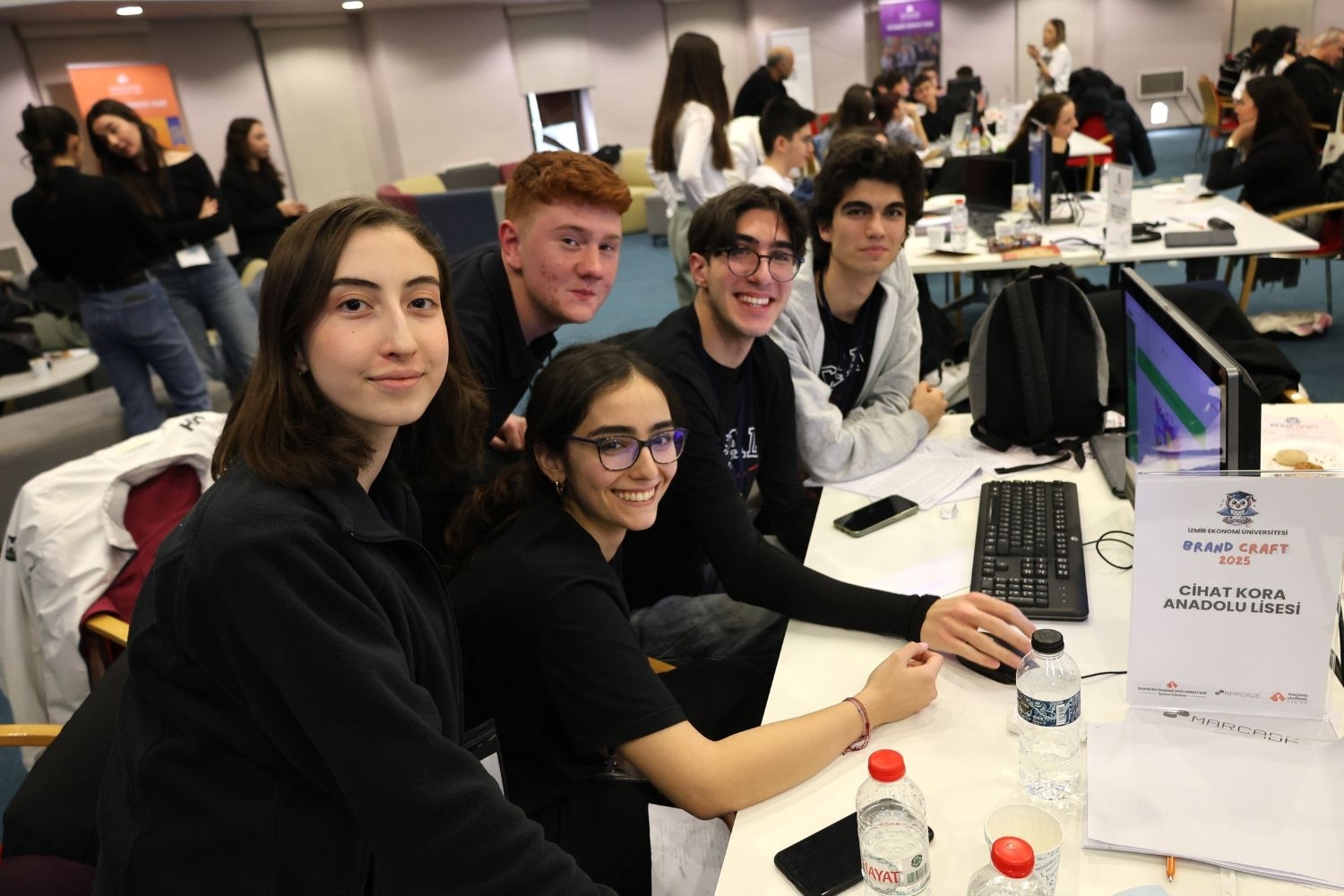
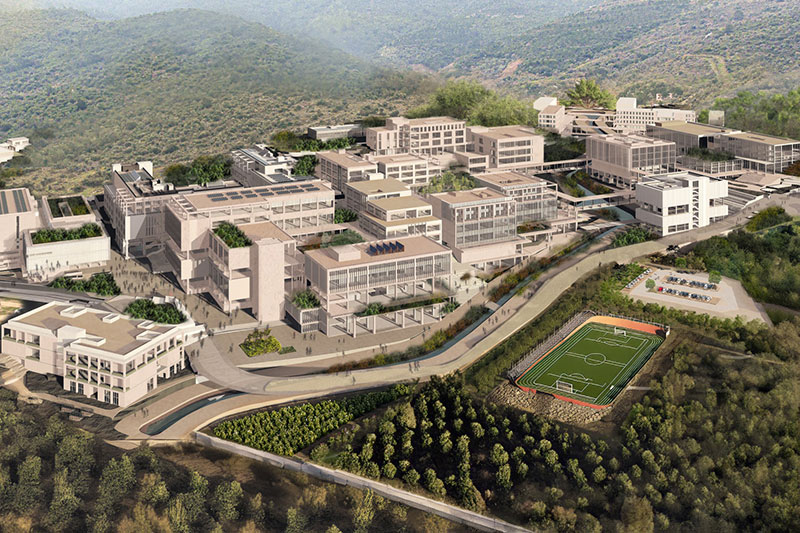
IZMIR UNIVERSITY OF ECONOMICS GÜZELBAHÇE CAMPUS
DetailsGLOBAL CAREER
As Izmir University of Economics transforms into a world-class university, it also raises successful young people with global competence.
More..CONTRIBUTION TO SCIENCE
Izmir University of Economics produces qualified knowledge and competent technologies.
More..VALUING PEOPLE
Izmir University of Economics sees producing social benefit as its reason for existence.
More..
You are one step ahead with your graduate education at Izmir University of Economics.